Last night I saw on the BBC News a piece about Google’s new quantum super computer and the Willow Chip that could “change the world”.
I have to say that based on everything else in the news yesterday the concept of even greater artificial intelligence (and it being in the wrong hands) fills me with fear and trepidation.
However, there are other Willow Chips available! These can be an undeniable force for good without any of the worrying trade-offs.
If you are interested in regenerative agriculture, you’ll no doubt already be aware of the benefits of using Ramial Woodchips. The best source of ramial woodchips is small diameter stems from willow coppice. The reason is that willow has all sorts of wonderful chemicals in their stems such as salicins, phenolic glucosides, tannins and growth hormones. As such they provide a brilliant organic mulch for your plants which will help them:
Also, being small diameter woodchips, they don’t rob the soil of nitrogen as they decompose. What’s not to like?
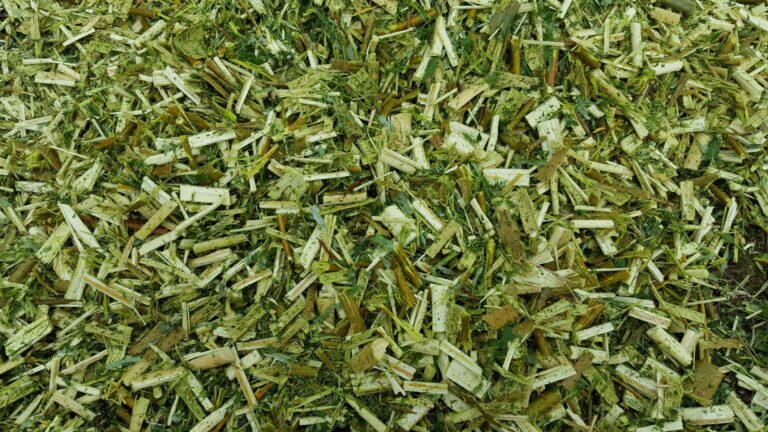
Freshly harvested Ramial Woodchips produced from Short Rotation Coppice willow harvested with a forager.
No doubt you are already convinced and ready to order? If you look online, you may be a bit perplexed that there are few places where you can buy this miracle mulch. However, don’t despair, we can supply woodchips fresh from harvesting Short Rotation Coppice (SRC) willow plots. Please drop me a line if you are interested in a bulk delivery and we’ll provide a competitive quote.
If you want to DIY your own Ramial Woodchips, then you should consider planting our productive SRC willow varieties. These have been bred for yield and as a result are very fast growing and will produce copious quantities of ramial woodchips quickly. Sure, you can try and get ramial woodchips from native willows, but you will disappointed. Why? Because, most native willows will not be improved (they are simply a population of seedlings) and therefore you are going to
Hopefully, you get the point.
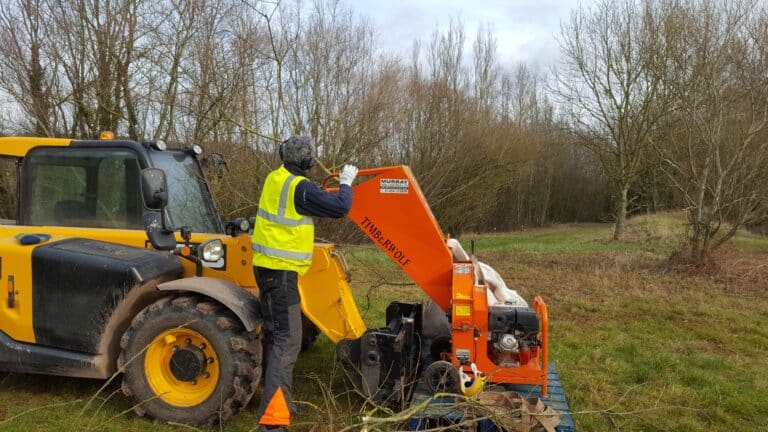
Kevin producing some willow Ramial Woodchips for a trial looking at apple scab reduction on a Somerset orchard.
For some, native is the only way to go but please give this some thought. Our island nation has been cut off from mainland Europe for 6,000 years. The genus Salix is between 40-60 million years old. As a result, bees, bugs and butterflies do not know the difference between something that has been here for 6,000 years and willows bred using European species. If you don’t believe me, why not plant some productive willow next to some natives? We have done this at Woodoaks Farm in Hertfordshire so we can demonstrate yield potential and biodiversity of both right next to each other. It’s early days yet but I assure you that the difference in yield will be stark but the difference in biodiversity negligible. If you want to read more about native versus productive then take a look at this blog.
Of course, willow woodchips can be used for lots of other things as besides ramial woodchips. For instance:
In addition, by growing willow as SRC you can also produce a plentiful supply of fodder for animals whilst also helping your farm adapt to climate change by providing a perennial crop that can help reduce the velocity of flood waters, reduce soil erosion from the land and improve water quality. Again, for immediate and cheap options productive SRC puts you in the fast lane. Going native will do the job less well and take longer.
If you are interested in buying productive SRC willow cuttings and rods for DIY woodchip production, then please order some today.
Compared to most things that are happening in the world, that would at least make for a good news story!
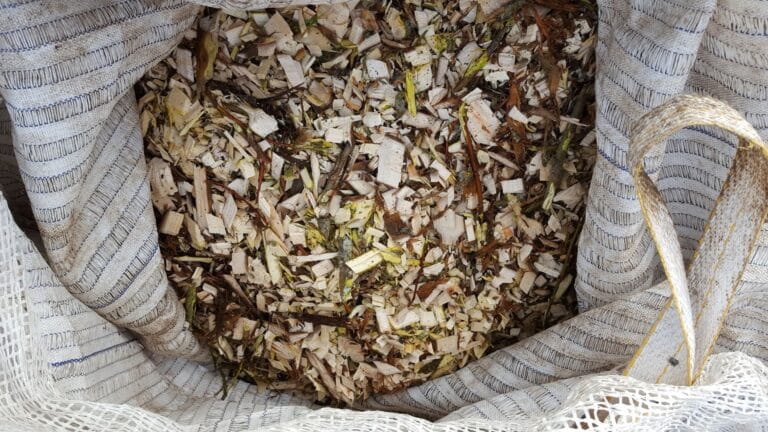
DIY production of ramial woodchips from an SRC willow plantation is cheap and relatively easy. We produced 3 dumpy bags full in a couple of hours.