Last month there was a court action brought by 4,000 people against Avara Foods Limited, Freemans of Newent Limited and Welsh Water based on allegations of “extensive and widespread pollution” in three rivers: the Wye, Lugg and Usk. Extensive poultry rearing in the area with an estimated of 23 million birds produces huge amounts of chicken litter. This is spread on farmland; it rains and phosphorous and nitrogen leaches into the rivers. It causes eutrophication (algae blooms) which rob the river of oxygen and kill fish and other wildlife in the food chain.
It’s a very depression problem but there is an easy win that could be deployed and make an almost immediate difference.
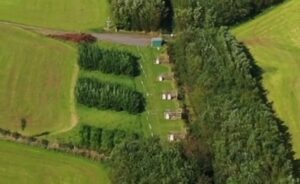
Researchers at Queen’s University Belfast and the Agri Food and Biosciences Institute (AFBI) in Northern Ireland have been monitoring Short Rotation Coppice willow buffer strips to reduce diffuse sources of on farm pollution for over a decade. The 14 m wide buffer strips are situated adjacent to a stream at the bottom of a slope. The surrounding farmland is used for intensive dairying activity and it being Northern Ireland, there is plenty of rain that causes the faeces and urine to run off down into the stream. There are three willow buffer strips and three grass controls.
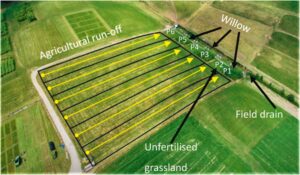
Over the last 9 years willow has been consistent in reducing the amount of phosphorous entering the water course by 35%. That’s significant – the land take is fairly minimal. The cost to establish is modest and you can utilise the willow chip as animal bedding and willow leaves as fodder.
Let’s crunch the numbers. Let’s say your field has 500 metres that is adjacent to a water course. A willow buffer strip of 14 m would take up just 0.7 hectares. You could potentially reduce it to 10 m and that would reduce the land take to 0.5 hectares.
For this area you would need 8,300 to 11,620 willow cuttings. Depending on if you buy willow cuttings or whole rods this will cost you in the region of £1,500-£2,500. Then you have to prepare the land and plant the willow. In total you should allow around £3,500 – £4,000 for establishment in total. Now, this is more expensive than planting commercial plots of SRC because you haven’t got the economies of scale. However, you will be reducing phosphate run off by 35% in less than 18 months of planting.
This investment would demonstrate to legal bodies that landowners are utilising an evidence based approach and showing willingness to take on the problem head on. In addition, it will show local people that the alleged perpetrators are listening to their concerns and being proactive rather than denying the problem is theirs.
From 0.7 hectares of willow planted into nutrient rich, weed free land a landowner should easily achieve a yield of around 50 green tonnes of wood chip after three years. That’s plenty of bioactive bedding that will help the welfare of your animals or ramial woodchip that could be deployed for yield benefits of other crops. Alternatively, you could crop your willow twice a year from year 2 and get around 20 tonnes of fresh fodder per cut.
Any way you look at this, there is so many positives to be gained. The alternatives of ignoring the problem don’t help anyone, least of all the fish.
Want to DIY? Buy willow cuttings or willow rods here.
Read the full case study here.